About Wama Kana Rabbuka Nasiya
Life can feel heavy sometimes. There are times when everything feels like it is falling apart. You give it your best, but you can’t move anything. You feel stuck. In such times, one line will bring great comfort : “Wama Kana Rabbuka Nasiya.
This is a verse from Surah Maryam in the Quran. It means: “And your Lord does not forget.” These are brief words, but they have a message that is profound and powerful. Let’s look at what they mean and how understanding them can bring clarity to your life.
What Does “Wama Kana Rabbuka Nasiya” Mean?
The term occurs in Surah Maryam (19:64). “So is a sign which has come to the story of Maryam and also that Allah does not forget His servants. And then at “and he calls his friend”….
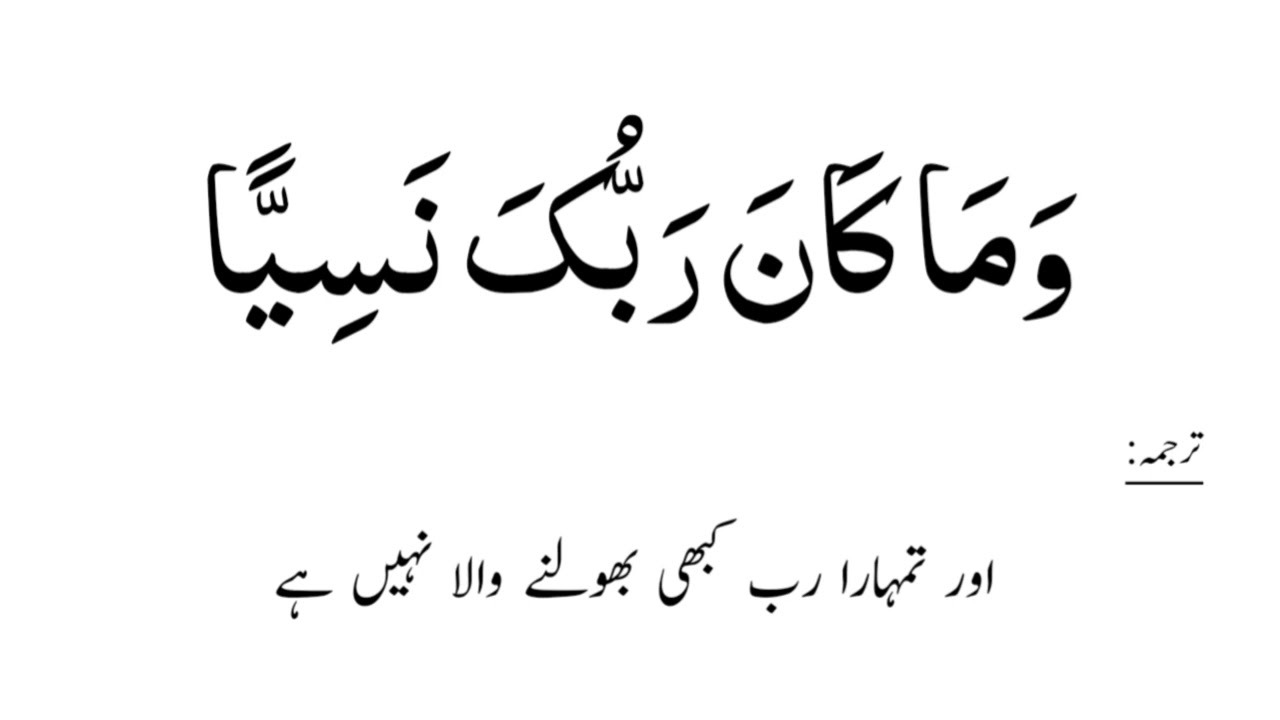
In Arabic:
وَمَا كَانَ رَبُّكَ نَسِيًّا
In transliteration:
Wama Kana Rabbuka Nasiya
In translation:
“And thy Lord is no forgetful one.
It’s a plain and simple statement. But its meaning runs deep. It tells us something very significant about our relationship that we have with Allah. He is always aware. Always present. Always in control.
Why These Words Matter
Think about your own life. Have you ever felt forgotten? Perhaps you prayed something for years and never had the answer. Or do you have some hurt and wonder if anybody sees that.
This is the verse that speaks loudest then. Allah does not forget you. He doesn’t ignore your efforts. Every tear, every prayer, every moment of patience — you are seen. You are remembered. Always.
This is not just a nice idea. It is a promise of the One who made you.
A Reminder in Times of Difficulty
“Wama Kana Rabbuka Nasiya” is not just something that feels good to say. It’s real. For others, these words have brought solace in difficult times.
If you have ever lost someone, failed, or felt alone, then you’ve likely questioned your worth. But this verse is there to let you know: You are never, left on your own, never abandoned.
Allah is there even when you don’t feel Him. He is not un-mindful of your suffering or your efforts. He’s just working behind the scenes in ways you cannot yet see.
Understanding the Context
So let’s take a look at when it was revealed. It is a dialogue between Angel Jibreel and Prophet Zakariya. For years the Prophet had been praying for offspring. And Allah heard each and every prayer. And at the right time, He granted Zakariya a son, Yahya (John).
And that is when the angel says “Wama Kana Rabbuka Nasiya.”
This wasn’t about a child at all. It was about patience. On trusting in Allah’s timing. If you’ve ever waited on somebody or something, feeling like your patience would never be rewarded, this story is for you.
How to Apply This Verse in Your Life
So you may wonder how to relate this verse to your daily fight. Here are a few simple ways:
Repeat it in prayer:
Whenever you feel abandoned, or lonely in any way, recite this verse in your duas. It might change your perspective.
Reflect on past blessings:
Think of times when you managed to get things right, even if that wasn’t what you were anticipating. It is a reminder that Allah has always been there.
Keep making effort:
Don’t give up. Even if you don’t see any changes immediately, remember that Allah is seeing your labor.
Faith is Built on Trust
Many are tormented by doubt. That’s normal. But verses such as, “Wama Kana Rabbuka Nasiya” serve to ground your heart. It’s a reminder that faith has nothing to do with seeing everything clearly. It’s about believing when you don’t.
You may not know the plan. But you know the One who made it!
Other Verses That Offer Hope
The Quran is replete with verses that foster hope and trust. Here are a few that pair nicely with “Wama Kana Rabbuka Nasiya”:
“For indeed, with hardship [will be] ease” (Qur’an 94:6)
“Remember Me, I will remember you” (2:152 An-Nisa)
He is the Best Knower of what is in the chests. (67:13)
Each verse is more comfort than the last. Collectively, they testify to the fact that Allah’s attention is ongoing.
The Keyword in Real Life
Whether you’re overwhelmed with school or work or concerned about family, or anxious about your health — this verse can offer a salve for all of those things. “Wama Kana Rabbuka Nasiya” says you are important even if other people do not see what is happening to you.
All too often, it feels like a big world out there and we are small. But Allah sees everything. And that can empower you to continue on.
Stay Connected to the Quran
This verse is just one of many that can change your outlook. Try to make time daily or weekly to read the Quran, even if it’s just one verse. You’ll be surprised how much peace it brings.
Final Thoughts
“Wama Kana Rabbuka Nasiya” is more than a Quranic verse. It’s a message of hope. A good reminder that you aren’t ever alone. Crappy things happen in life, but Allah doesn’t forget you.
Allow these words to settle in your heart. Let them be your navigating light when it gets rough. For even if the world does not recognise you, your Lord never forgets.
FAQs
Q: What does “Rabbuka” mean?
A: It means “your Lord.” It’s a personal word that says Allah is near you.
Q: What does “Nasiya” mean?
A: It means “to forget.” ‘Nasīya’, Therefore, in this context does not mean twinkling (does not forget) either.matches the objective case.
Q: Is this Ayah exclusively for Zakariya?
A: No. Though it was told in his story, the message is for us all.
Q: This verse is so hard to remember on an everyday basis.
A: Write it down. Keep it on your phone. Say it when you feel low. Include it in your regular dua.
Q: Is this verse just for life’s big problems?
A: No. It even counts as small struggles and hardships in the sight of Allah.” All of your life is visible.