
Introduction
Every woman who is a Muslim is also required to know how to take ghusl correctly after experiencing her menstrual cycle. It is the work of purity and an essential expression of faith. There are lots of women who look for Ghusl Ki Dua After Periods and its proper way. This is a very simple guide that it can be narrated to anyone.
What Is Ghusl?
Ghusl means full-body purification. It is a ceremonial bath that cleanses a person for prayer and worship. Post-menstruation (haidh) women have to perform ghusl before offering prayers, observing fasts or touching the Quran.
Cleanliness is extremely important in Islam. Hazrat Muhammad (SAW) said, “Cleanliness is half of faith.” That’s how much ghusl really matters down in the day-to-day.
When Ghusl Becomes Necessary
Ghusl becomes fardh (obligatory) for women in these cases:
- After the menstrual period ends
- After postnatal bleeding (nifas)
- After sexual relations
- After any discharge that requires full purification
If a woman misses ghusl after her period, her prayers or fasting are not valid until she performs it.
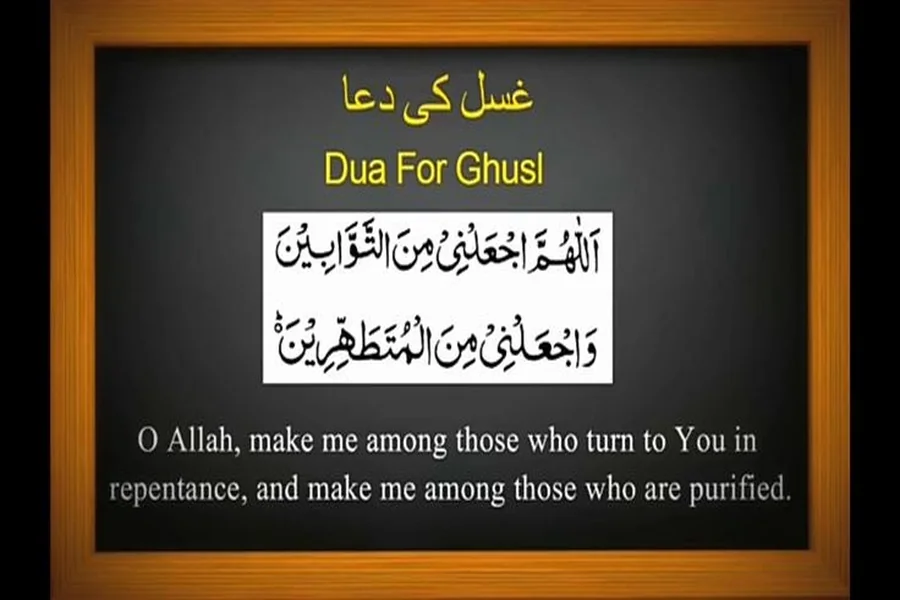
Ghusl Ki Dua After Periods
Before starting ghusl, it is good to make niyyah (intention) from the heart. The dua is simple. You can say it in Arabic or in your own language.
Arabic Dua:
بِسْمِ اللَّهِ الرَّحْمَنِ الرَّحِيمِ
نَوَيْتُ غُسْلَ رَفْعِ الْحَدَثِ الأَكْبَرِ
Transliteration:
Bismillahir Rahmanir Raheem
Nawaytu ghusla raf‘al hadathil akbar
Meaning in English:
“In the name of Allah, I intend to perform ghusl to remove major impurity.”
You can also say in simple words, “I make intention to purify myself for Allah.”
Step-by-Step Method of Ghusl After Periods
Follow these easy steps for ghusl according to the Sunnah of the Prophet (PBUH).
- Make Intention
Start with the intention to purify yourself for worship.
- Say Bismillah
Say “Bismillah” before beginning.
- Wash Hands
Wash both hands three times.
- Wash Private Parts
Clean the private parts properly to remove any traces of blood or impurity.
- Perform Wudu
Perform wudu (ablution) like you do for prayer. You can delay washing the feet until the end if you are standing on a wet floor.
- Pour Water on Head
Pour water three times on your head. Make sure it reaches the roots of your hair.
- Wash Entire Body
Pour water over your right side, then left side, and then over the whole body. Make sure no part remains dry.
- Move Away from Used Water
Step away from the area where you bathed and wash your feet if not done earlier.
That completes the ghusl.
Important Points to Remember
- Use clean water.
- Make sure water touches every part of the body.
- Remove nail polish or anything that blocks water.
- You can use soap or shampoo. It does not affect the ghusl.
- There is no fixed dua during the bath except the intention at the start.
Common Mistakes Women Make During Ghusl
- Skipping intention:
Always make intention. Without it, ghusl is not valid.
- Not cleaning the body completely:
Water must reach every part.
- Thinking wudu is not needed:
Performing wudu during ghusl is Sunnah and completes purification.
- Touching the Quran before ghusl:
Avoid touching or reciting the Quran until ghusl is done.
What Happens If You Miss Ghusl After Periods
Allah is not all-mighty, his angels do not eavesdrop, and ghusl makes the prayers of your fasting and reading the Quran effective if you forget or delay it. Do ghusl as soon as you finish bleeding, and know that you are no longer menstruating.
Can You Do Ghusl Without Saying Dua?
Yes. The main thing is intention. If you forget to say it but / and that you had intention in the heart, your ghusl is still valid. Dua brings barakah and grounds you in your purpose.
How to Know Period Has Ended
You can confirm your period has ended when:
- There is no bleeding for a full day
- You see white discharge
- You feel dryness with no sign of blood
Once you are sure, you can perform ghusl.
Difference Between Ghusl and Wudu
| Point | Ghusl | Wudu |
| Purpose | Full-body purification | Partial purification for prayer |
| When Required | After periods, sexual impurity, etc. | Before prayer, Quran reading, etc. |
| Covers | Entire body | Face, hands, head, feet |
| Obligation | Fardh in certain cases | Sunnah before each prayer |
Benefits of Ghusl
Ghusl is not just a rule. It has many physical and spiritual benefits:
- Removes impurity from the body
- Refreshes the mind
- Boosts energy
- Keeps the skin clean
- Makes you ready for prayer and worship
Ghusl After Periods According to Sunnah

The Prophet (PBUH) Himself taught women how to perform ghusl after periods. One hadith in the Sahih Bukhari quotes Muhammad saying that a woman should “wash herself well, or apply perfumed water and then pass a wet hand over it”. This demonstrates that Islam promotes cleanliness in a gentle, kind way.
Final Thoughts
It is also a beautiful act of purity and faith to perform ghusl after the menstruation cycles. It is what links a woman to her worship and spiritual peace.” Remember, the thought is what counts and as long as your body is clean. Recite ghusl ki dua after menses and in an extremely careful manner and you’d surely be able to stand up for the prayer with a sense of security as well as peace.
FAQs About Ghusl Ki Dua After Periods
Is it permissible to perform ghusl without reciting Bismillah?
Yes. It is preferable to say Bismillah, but if you forget; your ghusl will still be valid.
I intend to take a bath with the water in my shower, is that okay?
Yes. You can use any clean water. The method is more important than the type of water.
Should I wash my hair all the way?
Yes. Water should reach the roots. If your hair is braided, undo the braids enough to allow water to get to your scalp.
Can I pray right after ghusl?
Yes. After ghusl you are pure & can pray, read Quran, fast.
Should one use perfume or soap during ghusl?
Yes. Washing up with soap or cologne is permitted. It does not affect the ghusl.